EP GROUT
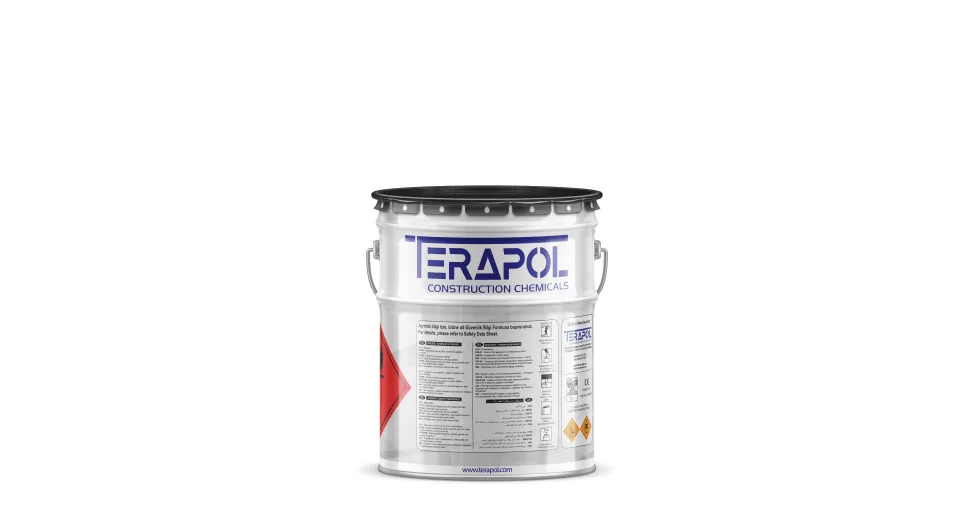
Three-component repair, installation and grout mortar
A three-component, solvent-free, non-shrink, self-levelling epoxy repair, anchoring, installation and grout mortar, applied to horizontal surfaces and applicable without primer in thicknesses of 4-50 mm.
Areas of Use
- Under bridge bearing plates and at the bases of metal columns.
- On crane rail tracks.
- In machine foundations on concrete and for anchor bolts.
- For anchoring prefabricated structures.
- In non-flexible joints.
- For bonding materials such as concrete, wood and metal.
- For installing rebar starter bars in concrete.
- For crack repair in precast and reinforced concrete.
- Used for surface repair of damaged floors.
Advantages
- Does not shrink (non-shrink).
- High impact and abrasion resistance.
- Quick to apply.
- High bond strength on different surfaces.
- Impermeable to mineral oils, petroleum, acids and water.
- Resistant to vibration.
- Can be opened to foot traffic within 24 hours and to heavy traffic within 7 days.
Packages & Quote
3.50 kg + 5.40 kg + 20 kg = 25 kg set
Enter a quantity for the package size you need and add it to your quote list, so your request states the exact package up front.
| Package | Qty | |
|---|---|---|
| 3,50 kg + 5,40 kg + 20 kg = 25 kg set |
| Consumption | 2.0 kg/m² per 1 mm of thickness. |
|---|---|
| Shelf Life | Can be stored for 12 months in its unopened original packaging in dry environments at temperatures between +5°C and +25°C. Opened packages must be used immediately. |
Application
Surface preparation: The surface to be treated must be free of any residues that would prevent adhesion. Loose parts with poor adhesion must be removed from the surface. Rust on metal parts must be cleaned off and their contact with the mortar cut off with an anti-rust coating. Absorbent surfaces must be saturated with water. Make sure the formwork is very well cleaned and leak-tight, and fix it firmly. Standing water on the surface must be removed before application. Mixing: Component B is added to component A and mixed with a low-speed mixer. Component C is then added and mixed until a homogeneous mixture is obtained. Application: Immediately after mixing, pour into the formwork cavities or onto the surface (4-50 mm). For repairs, the mortar is poured onto the surface and worked well into place with a notched trowel. For grouting, the mortar must be poured from one side of the formwork only and without interruption, and a hook-ended steel wire should be used to make sure the material settles fully. Formwork must not be removed before 24 hours and levelling wedges not before 2 days; check the bolts after the machine has been put into operation. Protect the fresh application from external influences for 48 hours. For applications thicker than 5 cm, wait 4-5 hours after each 5 cm before applying the next layer. Use in machine foundations: Before the machine is placed, clean loose and damaged areas of the concrete and roughen the surfaces that will receive the grout. Remove any foreign matter on the bolts and base plate surface, such as oil, grease or dust, that could affect grout performance, and make sure the surfaces are dry. Air-release holes must be drilled in the base plate beforehand. Place the machine and set its position and level; after that its position must not be changed. If the levelling wedges (shims) are to be removed later, oil them lightly so that the mortar does not stick. Preparing the formwork: Formwork must be made of sound material and assembled to withstand the forces it will meet during the work. On the side where the grout will be poured, leave a pouring gap of about 5 cm between the edge of the base plate and the formwork. To provide the pressure needed for the grout to spread, consider the formwork height on the pouring side as appropriate. To fill under very large plates, measures such as creating a pressure head of up to 1.5 m or using a pump, pipes or similar equipment may be needed. Formwork edges must be gap-free to prevent leakage and pressure loss. Application tools: pouring, trowel.
Technical Properties
| Compressive strength (+20°C) (TS EN 12190) — 1 day | 60-80 N/mm² |
|---|---|
| Compressive strength (+20°C) (TS EN 12190) — 14 days | 80-100 N/mm² |
| Flexural tensile strength (+20°C) (TS EN 12190) — 1 day | 15-30 N/mm² |
| Flexural tensile strength (+20°C) (TS EN 12190) — 14 days | 20-40 N/mm² |
| Pull-off bond strength (14 days, 20°C, EN 1542, EN 12188) — concrete | >3,5 N/mm² |
| Pull-off bond strength (14 days, 20°C, EN 1542, EN 12188) — steel | ~15-20 N/mm² |
| Creep (EN 52540) | -0,03% |
Retail sales and delivery within North Cyprus (TRNC) only. Abroad, we operate on an export (wholesale) basis only.
Contact us for pricing & a quote
Add the products and packages you need to the quote list, or contact us directly.